
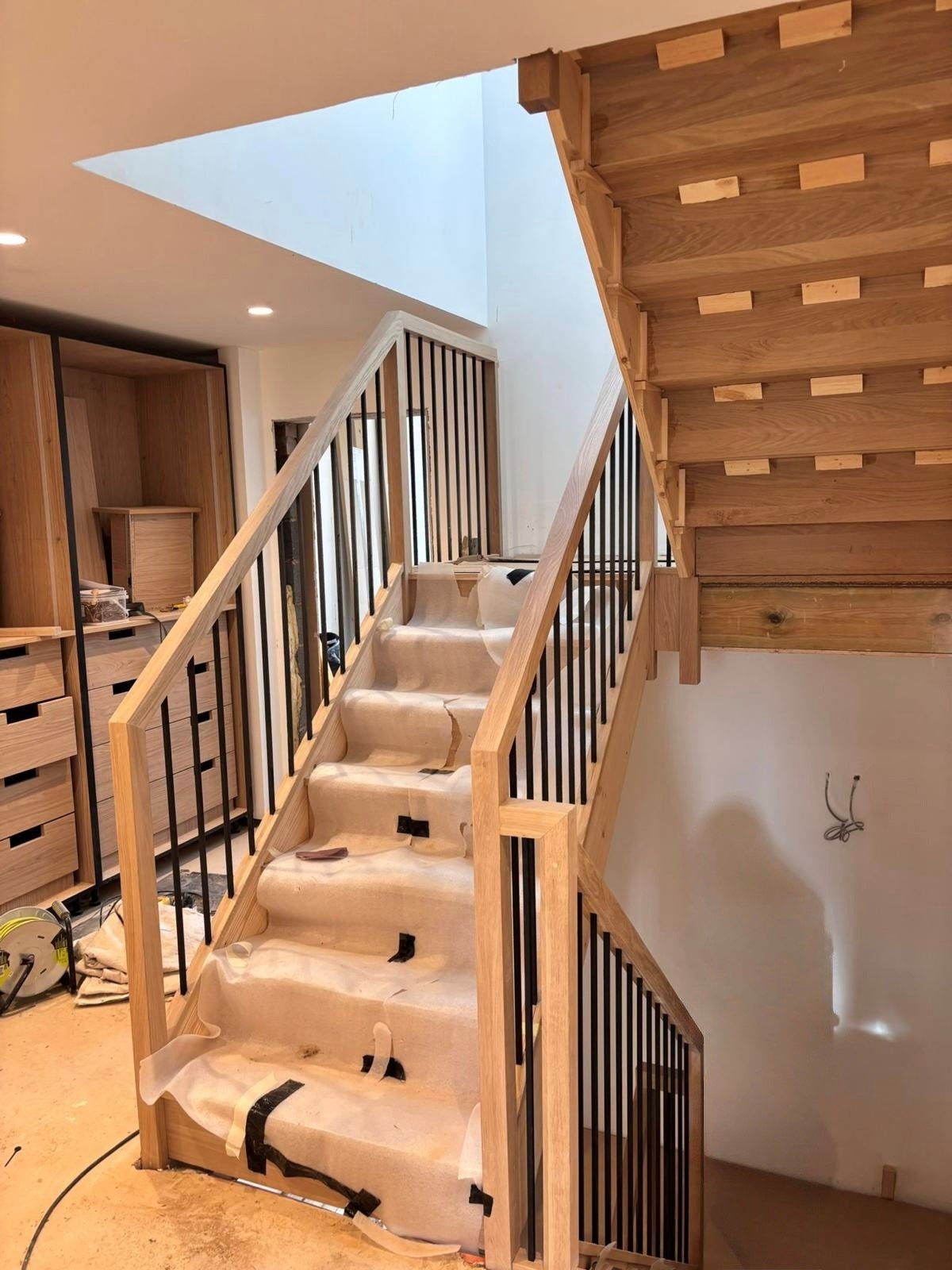
After 40+ years supplying both, we break down the real differences between oak and softwood staircases — cost, durability, maintenance, and how to choose.
After more than 40 years supplying bespoke staircases to homeowners across London, Hertfordshire, and Essex, we're asked the same question more than almost any other: oak or softwood? Both are excellent materials. Both will give you a staircase that lasts. But the right answer depends on your home, your plans, and your priorities.
This guide cuts through the noise. You'll find a straight comparison, real guidance on cost and maintenance, and a simple decision framework to help you choose.
Here's how the two materials stack up across the factors that matter most:
Hardness: Oak scores around 1,290 lbf on the Janka hardness scale. Softwood (pine/redwood) typically measures around 870 lbf — roughly a third less resistant to surface denting.
Durability: Oak is exceptional — resists dents and scratches even in high-traffic areas. Softwood is good when protected by carpet or a quality lacquer; more prone to wear on exposed treads.
Appearance: Oak has a rich warm grain in golden-to-amber tones that deepens with age. Softwood has a lighter, more uniform grain — the ideal base for paint.
Cost: Oak carries a higher supply cost at every specification. The gap is widest on complex configurations and narrows on straight flights.
Maintenance: Oil-finished oak needs re-oiling every 3–5 years. Unpainted softwood needs re-sanding and re-finishing every 5–7 years; painted softwood can be touched up as needed.
Lifespan: Solid oak stairs commonly last 30–50 years with normal care. Softwood stairs last 20–30 years exposed; significantly longer if carpeted.
Best for: Oak suits feature staircases, period homes, and high-footfall areas left exposed. Softwood suits budget builds, loft conversions, carpeted stairs, and painted finishes.
The hardwood vs softwood distinction comes from how the trees reproduce, not how hard the timber is. Oak is a deciduous hardwood — it grows slowly, producing a denser, tighter grain. Pine and redwood are softwoods from faster-growing coniferous trees.
In practice, that density difference matters on a staircase. The Janka hardness gap — roughly a third more resistance to denting in oak — is what you're paying for when you choose the more expensive material.
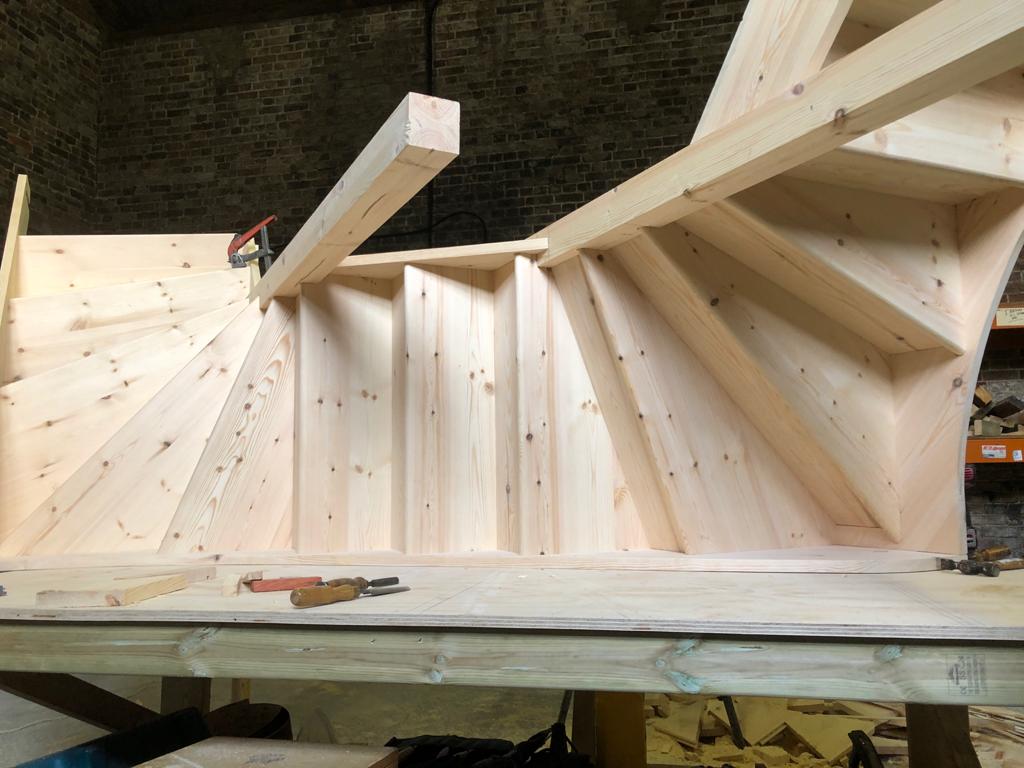
That said, softwood is far from fragile. DAB Stairs softwood staircases are built from premium-grade engineered redwood. Covered with carpet or treated with a quality finish, a well-made softwood staircase will serve a busy household for decades.
Oak's density means it handles heavy daily use well. The nosing on each tread — the front edge that takes the most contact — holds its shape over years. Scratches and scuffs that would notch a pine tread tend to leave only a surface mark on oak that buffs out or blends naturally into the patina.
In our experience supplying staircases over four decades, solid oak stairs still performing after 30 or more years are not unusual. An oak staircase left exposed remains a feature of the home rather than something that needs replacing or covering.
Softwood performs well when protected. If you're planning to carpet the stairs — common in family homes and loft conversions — much of the durability argument disappears. Carpet absorbs the impact, and the timber underneath stays in good condition. For a loft staircase or secondary flight that will always be carpeted, softwood is a sensible and cost-effective choice.
Oak has a distinct warm grain ranging from pale gold to deep amber. It finishes well with oil, lacquer, or wax — each giving a slightly different sheen and depth. Left to age naturally, oak darkens and develops character. It suits period homes and open-plan contemporary spaces equally well.
Softwood has a lighter, more uniform grain. Its main aesthetic advantage is that it takes paint beautifully, which is why it's the default choice when a homeowner wants a staircase that integrates with the surrounding woodwork and walls.
One option many customers don't consider: a mixed-timber staircase. DAB Stairs regularly supplies staircases where the strings and risers are softwood — keeping cost down — while the treads and handrail are oak. You get the visual impact and durability of oak on the surfaces that matter most, with softwood carrying the structure. It's a practical middle ground worth discussing when you come to us for a quote.
Oak costs more to supply than softwood at every specification. The gap is largest on complex configurations — curved flights, winding steps, and decorative newel post detailing are all more expensive in oak because of the material cost and the additional machining required. On a straight flight, the difference narrows.
Both materials are supplied to your door ready for your carpenter or joiner to fit; the cost of fitting is the same regardless of which timber you choose. The material premium for oak is a fixed part of the staircase budget, not the whole project cost.
If budget is the primary constraint, softwood is the honest recommendation — especially for a loft conversion or a secondary staircase where premium finish matters less than function.
Oak: Oil-finished oak should be re-oiled every 3–5 years to maintain its appearance and seal the timber. Lacquered oak lasts longer between refinishes. Minor scratches can be buffed out. On balance, oak is a low-maintenance timber once properly finished and is unlikely to need significant attention within the first decade.
Softwood: An unpainted, lacquered softwood staircase will need re-sanding and re-finishing more frequently — roughly every 5–7 years in a typical household. If painted, touch up as scuffs appear and repaint every 7–10 years. The real maintenance saving with softwood comes from carpeting: with carpet covering the treads, maintenance is almost nil until you re-carpet.
Choose oak if:
Choose softwood if:
Consider a mixed-timber staircase if:
Do oak and softwood staircases both meet UK building regulations?
Yes — UK building regulations for staircases are based on dimensions, handrail heights, and balustrade spacing, not on timber species. Both materials comply equally. What matters is how the staircase is designed and manufactured.
Can I have an oak handrail with a softwood staircase?
Absolutely. Mixed-timber staircases are a popular and practical choice. Oak treads and handrail on a softwood structure is probably the most common mixed configuration we produce. It delivers the warmth and durability of oak at the surfaces you touch and see, while keeping the overall cost closer to a softwood specification.
How do I specify which timber when I get a quote?
When you come to us for a design consultation, timber choice is one of the first decisions we'll work through together. We'll ask about your home, your plans for the finish, and your budget — and give you an honest recommendation based on what we've seen work over four decades. Browse our case studies to see both materials in finished projects.
DAB Stairs has been supplying bespoke timber staircases from our Hertfordshire workshop for over 40 years. We supply throughout London, Hertfordshire, Essex, Cambridgeshire, and across the South East. Explore oak staircases or browse our softwood range.
 Blog
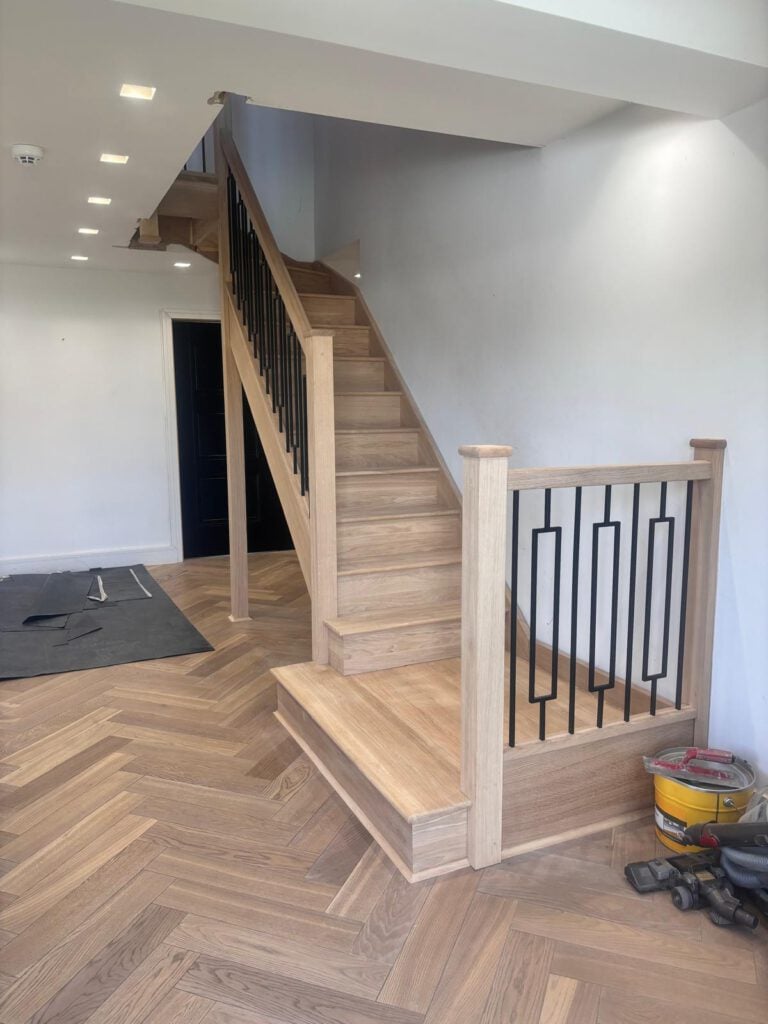
BlogExplore the top staircase design trends for 2026 — from floating oak staircases and glass balustrades to cut string designs and nature-inspired forms. Discover what's shaping the most impressive homes this year.
Read Article Blog
BlogA staircase is more than just a functional element connecting floors—it's often the architectural centrepiece of your home. Getting it right requires precision, expertise, and careful planning. Yet many staircase projects encounter costly problems that could have been avoided with proper measurement and planning.
Read Article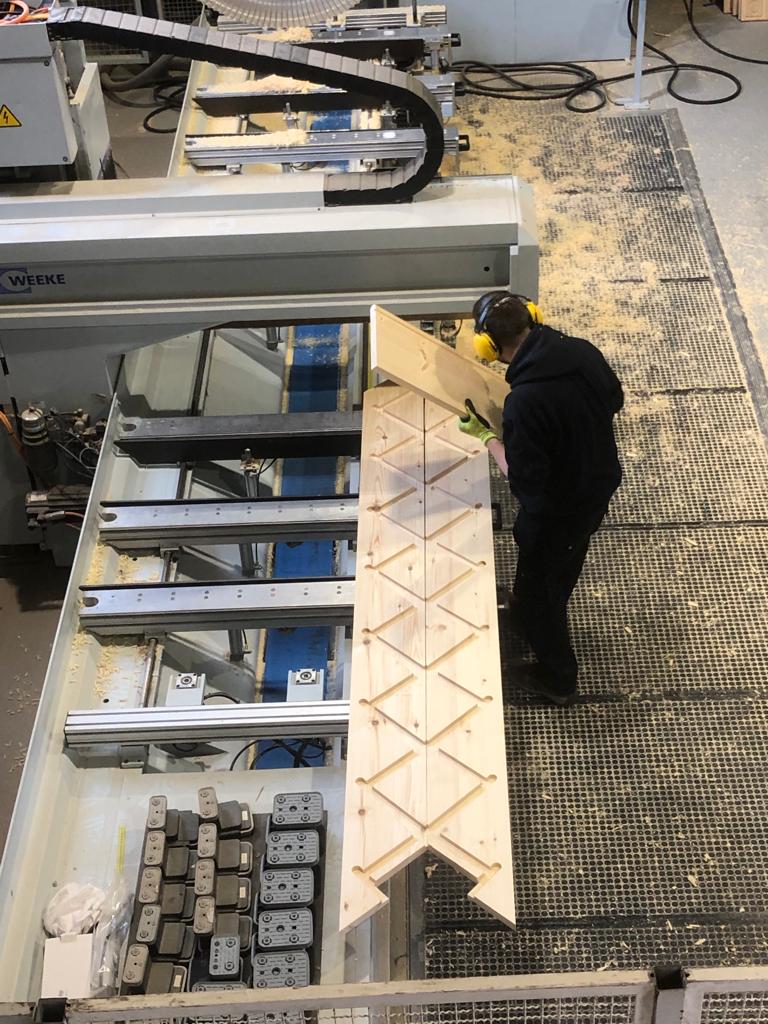 Blog
BlogAt DAB Stairs, we specialize in manufacturing high-quality timber staircases that become the centerpiece of any home. Our team combines traditional woodworking skills with modern techniques to create bespoke wooden staircases that elevate your home's design. We supply premium staircases directly to you and can recommend trusted local fitters for installation.
Read ArticleGet in touch with our team to discuss your project. We supply bespoke timber staircases throughout London, Hertfordshire, Essex, and nationwide — all made to measure.