
Explore the top staircase design trends for 2026 — from floating oak staircases and glass balustrades to cut string designs and nature-inspired forms. Discover what's shaping the most impressive homes this year.
Staircases have long outgrown their purely functional role. Today, they are among the most powerful design statements in any home — architectural features that set the tone for an entire interior. As we move through 2026, staircase design continues to evolve, driven by a demand for bespoke quality, natural materials, and spaces that feel both considered and timeless. Whether you are renovating an existing staircase or planning a new build, these are the ideas shaping the most impressive homes this year.
The staircase has come a long way from a purely practical structure connecting one floor to another. Over the past decade, it has become a defining element of interior design — one that architects, designers, and homeowners invest in with the same care as a kitchen or bathroom. The shift has been driven by a broader appetite for homes that feel personal, curated, and built with intention. In 2026, that momentum continues, with design trends favouring natural materials, clean geometry, and bespoke details over off-the-shelf solutions.
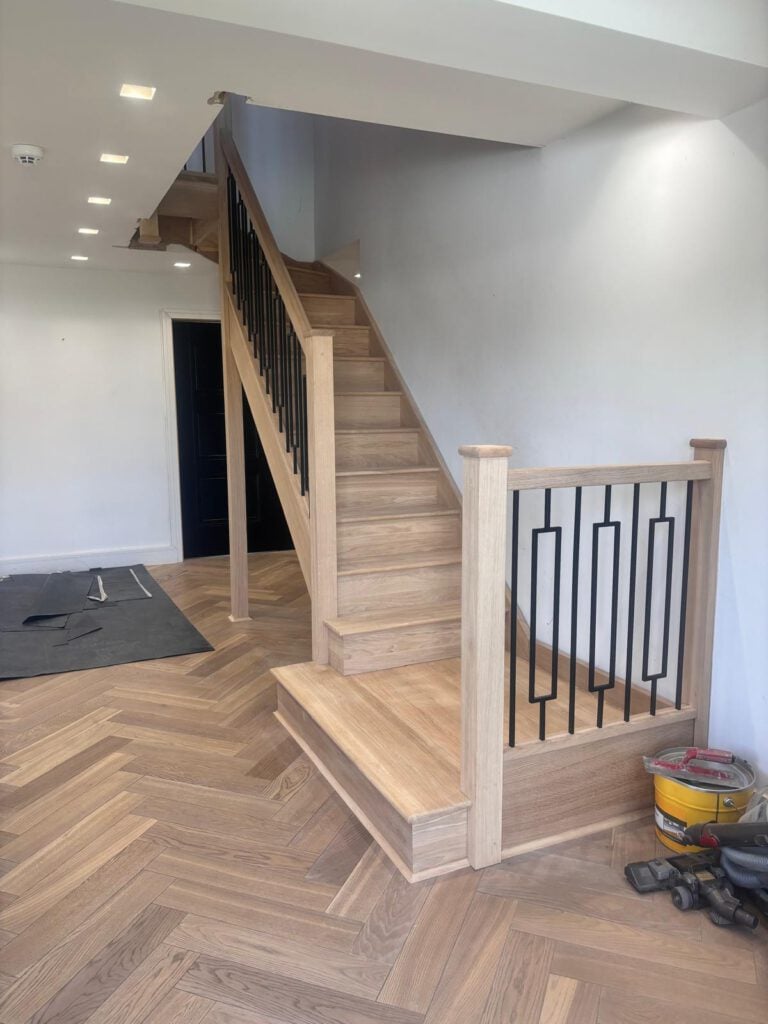
The pairing of warm solid oak treads with sleek black or brushed steel spindles remains the standout combination of the moment. It bridges the gap between traditional warmth and modern precision, working equally well in period properties and new builds. The contrast is bold without being aggressive, and the result ages beautifully.
Floating staircases — where treads appear to emerge from the wall with no visible support — create a striking sense of lightness and space. Popular in open-plan interiors, they allow sightlines to travel freely through a room and work especially well with glass or open-tread balustrade systems. In 2026, the demand for these continues to grow as homeowners prioritise both drama and spatial openness.
Glass balustrades paired with open-tread staircases are one of the most consistently requested combinations in contemporary staircase design. They maximise natural light flow between floors, make spaces feel larger, and complement a wide range of interior styles — from industrial to Scandi to classic. Frameless glass panels in particular are increasingly popular for a truly seamless look.
One of the strongest emerging directions in 2026 is staircase design that draws from the natural world — gentle curves, irregular edges, and forms that feel grown rather than engineered. Curved oak staircases with sweeping handrails sit at the heart of this trend, bringing warmth and a sculptural quality that straight-flight designs cannot match.
Not every home calls for oak. Softwood staircases — particularly pine — offer a more affordable route to a bespoke result, especially when finished with a quality paint. All-white painted staircases with contrasting dark handrails are particularly popular in family homes, offering a clean, classic look that feels fresh and timeless simultaneously.
As homes become more considered in how they use space, staircases with integrated storage have moved from a novelty to a standard request. Drawers built into the risers, cupboards beneath the flight, and pull-out shelving all allow the staircase to carry its weight both functionally and aesthetically. This is particularly relevant for loft conversions and smaller properties where every square metre counts.
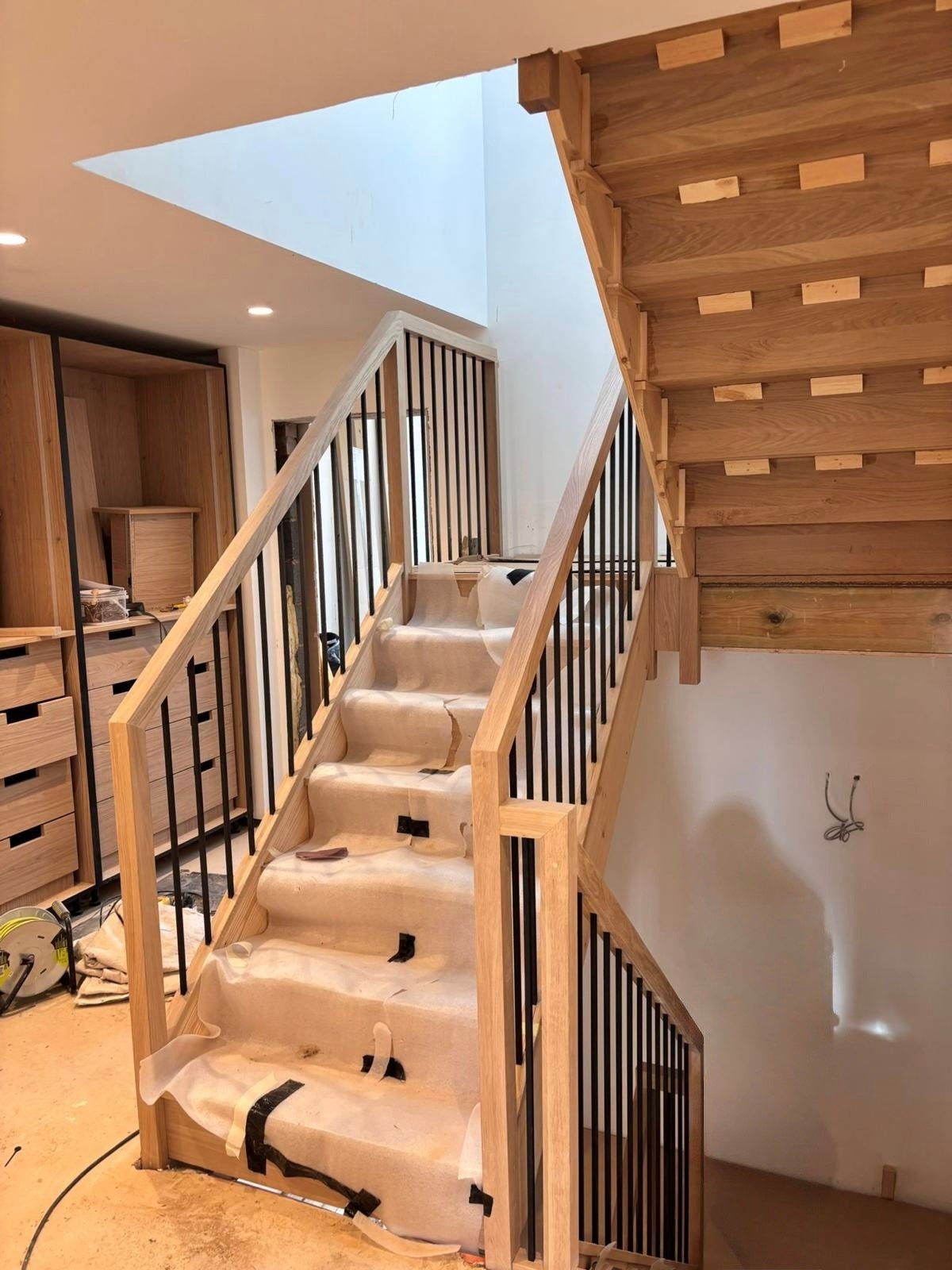
The cut string staircase — where the sides of the staircase are cut to follow the profile of each tread — exposes the ends of the steps, creating a refined, open appearance. It is a design that rewards quality timber, and in 2026 it continues to be the choice of homeowners who want something that feels architecturally deliberate rather than standard.
Sustainability is influencing staircase design in a meaningful way. Reclaimed timber — with its knots, grain variation, and history — is being specified more frequently by homeowners who want staircases that tell a story. Used for treads in particular, characterful timber adds warmth and individuality that cannot be replicated by new materials.
The preference for neutral, pared-back colour has not faded. In 2026, monochrome staircases in white, stone, greige, and black remain a strong choice precisely because they work with almost any interior scheme. A neutral staircase allows the architecture to breathe and makes it easier to update the surrounding space without the staircase feeling out of step.
With loft conversions remaining one of the most popular ways to add space to a home, the demand for staircases designed specifically for loft access has grown considerably. Space constraints, building regulation requirements, and the desire for the staircase to feel like a considered part of the home rather than an afterthought all make bespoke the right approach. Quarter-turn and half-turn configurations allow flexibility where a straight flight is not possible.
A bespoke staircase is one of the few elements of a home that is seen every single day — by everyone who lives there and everyone who visits. Unlike a piece of furniture that can be moved or replaced, a staircase is a permanent feature that shapes how a home feels and functions. The right design adds flow, light, and character to a space; the wrong one can hold a renovation back regardless of how much has been spent elsewhere.
Beyond aesthetics, there are practical considerations. Quality timber and correct construction mean a staircase that does not creak, does not flex, and does not require attention for decades. These are not outcomes that can be guaranteed with off-the-shelf products, which is why more homeowners are choosing to have their staircase made to measure.
At DAB Stairs, we supply bespoke staircases to homes and developments across London, Hertfordshire, Essex, and the wider South East. Every staircase we supply is made to measure — designed around your space, your brief, and your budget. We work with architects, developers, and homeowners directly, and our design consultation process ensures that what is supplied is exactly what you envisioned.
We supply in oak, softwood, and a range of other timbers, with balustrade options including glass, metal, and timber. Whether you are looking for a straight flight, a quarter-turn, a half-turn, or something more complex, we can help.
To discuss your staircase, call us on 0203 991 1071 or email info@dabstairs.com. Alternatively, book a design consultation and we will work through your requirements in detail.
 Blog
BlogAfter 40+ years supplying both, we break down the real differences between oak and softwood staircases — cost, durability, maintenance, and how to choose.
Read Article Blog
BlogA staircase is more than just a functional element connecting floors—it's often the architectural centrepiece of your home. Getting it right requires precision, expertise, and careful planning. Yet many staircase projects encounter costly problems that could have been avoided with proper measurement and planning.
Read Article Blog
BlogAt DAB Stairs, we specialize in manufacturing high-quality timber staircases that become the centerpiece of any home. Our team combines traditional woodworking skills with modern techniques to create bespoke wooden staircases that elevate your home's design. We supply premium staircases directly to you and can recommend trusted local fitters for installation.
Read ArticleGet in touch with our team to discuss your project. We supply bespoke timber staircases throughout London, Hertfordshire, Essex, and nationwide — all made to measure.