
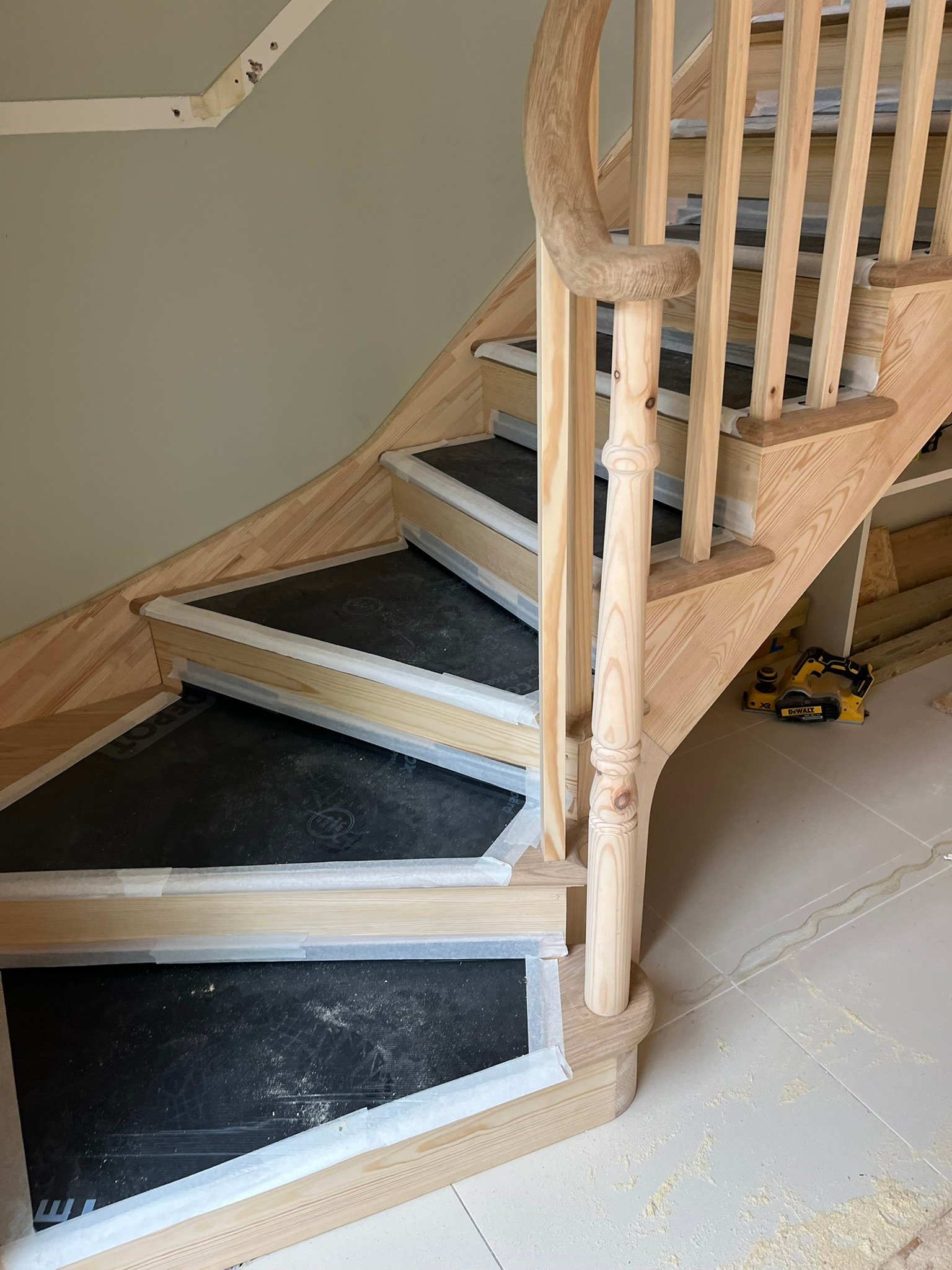
A £4,000 staircase and a £25,000 staircase can look similar in a photograph. The difference is in the geometry, the timber, the handrail and the joinery — and almost none of the companies quoting you will explain which of those you are actually paying for. Here is where the money goes on a high-value timber staircase, and how to specify one so the quotes you get back are comparable.
A £4,000 staircase and a £25,000 staircase can look almost identical in a photograph. Both might be oak. Both might curve. Both might have a handrail that sweeps into a volute at the bottom step.
The difference is in things a camera does not pick up: how the string is cut, whether the handrail is a genuine continuous wreath or a series of joined sections, how the boards were selected, and how much of the work was done by machine versus by hand. Those decisions are what move a staircase from the £3,000–£5,000 bracket into five figures.
Almost nobody in this industry publishes any of it. Search for a high-end staircase supplier and you will find beautiful galleries, forty-year histories and a contact form — and no indication of what anything costs or why. That is not an accident, but it does leave you trying to compare quotes without knowing what you are comparing.
This is what actually drives the number.
This is the single most common reason budgets go wrong on high-value projects.
Most published cost guides — the ones from trade directories — quote a figure that bundles the staircase together with structural work, on-site labour, decorating and finishing. That is a useful number if you want to know what the whole job costs. It is a useless number if you are trying to evaluate a manufacturer’s quote, because you cannot tell how much of it is the staircase.
We supply only. We design and manufacture the staircase in our Hertford workshop and deliver it to site; your builder or joiner handles everything from there. That means our quote is the staircase and nothing else — which is inconvenient if you want one number for the whole project, and extremely convenient when you want to know whether you are being charged a fair price for the joinery.
When you collect quotes, establish for each one whether it covers:
Two quotes £8,000 apart are often two quotes covering different scopes. Industry cost guides put on-site labour in London and the South East at roughly £250–£350 per day, versus £180–£250 further north — enough that the same staircase carries a materially different project total depending on where it lands.
A straight flight is the cheapest staircase to make because every component is a repeat of the one before it. The strings are straight boards. The treads are identical. A CNC machine can cut the whole set in a single run.
The cost curve from there looks roughly like this:
The jump at “curved” is real and it is large. A curved string is not a bent board. It is built up in laminated layers around a former made specifically for that staircase, then machined and cleaned up by hand. The former is used once, for your staircase, and then it is scrap. You are paying for a tool that exists only to make your stairs.
If you want a curve and the budget is finite, this is where to have the conversation early — sometimes a well-designed quarter turn with a good bullnose step and a strong handrail achieves most of the visual effect for a fraction of the cost.
On a high-end staircase the handrail is frequently the most expensive single element, and it is the detail that separates genuinely premium work from stairs that merely photograph well.
A straight handrail on a straight flight is a machined length of timber. A continuous wreathed handrail — one that flows without a break around turns, over landings and into a volute or swan neck at the bottom — is set out geometrically, cut from solid, shaped in sections and jointed so that the joints are invisible and the rail runs true under your hand.
This is genuinely difficult work and there are not many people left who do it well. It is also the thing people touch every single day, which is why it repays the spend.
The cheaper alternative is a segmented rail with mitred joints at each change of direction. It is perfectly serviceable. It also looks like what it is, and on a staircase intended to be the centrepiece of a hallway, the difference is obvious.
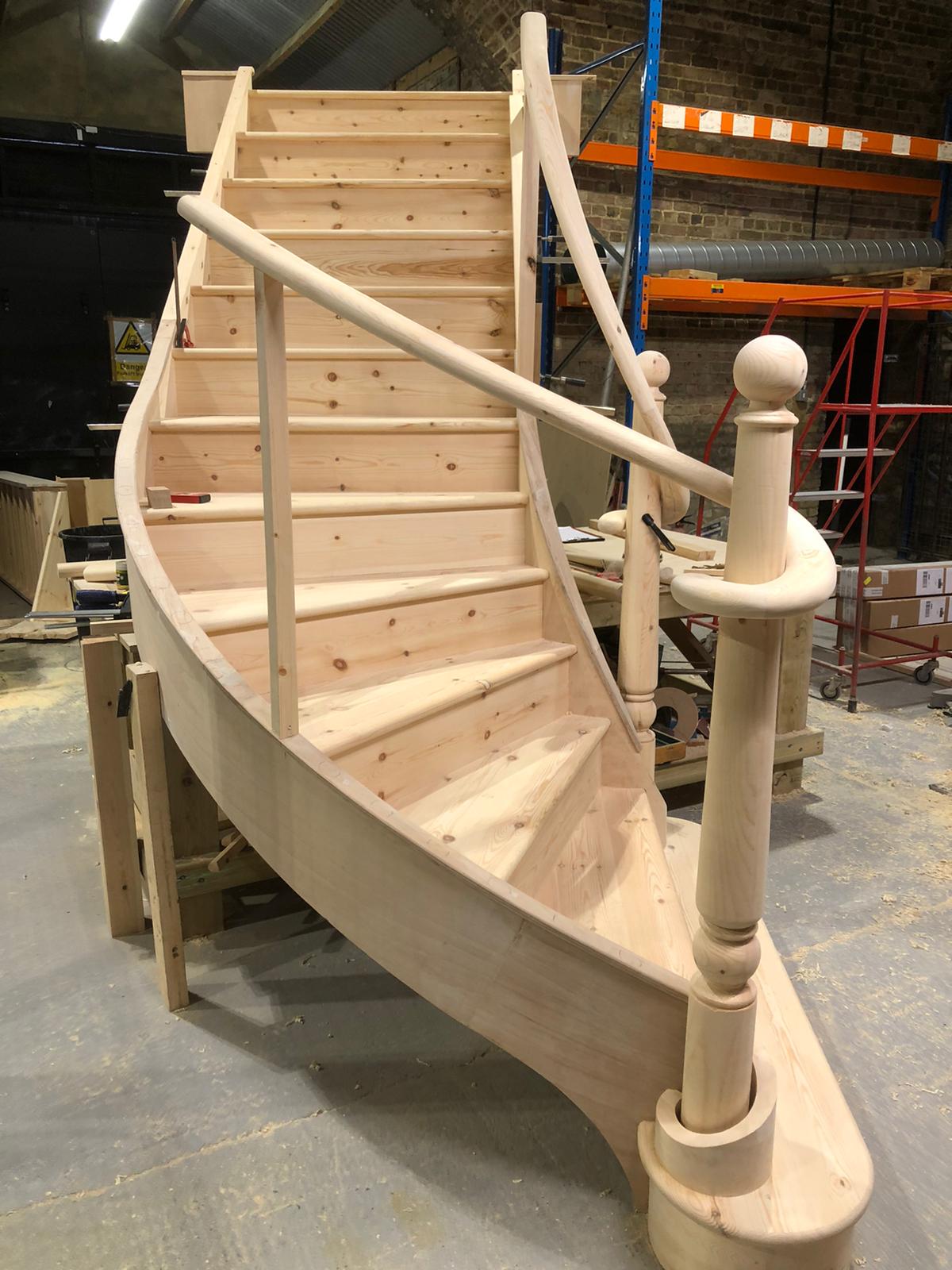
A closed string is the standard construction: the treads and risers are housed into a solid board that runs up each side, hiding the step profile behind it. It is efficient, strong and by far the more common approach.
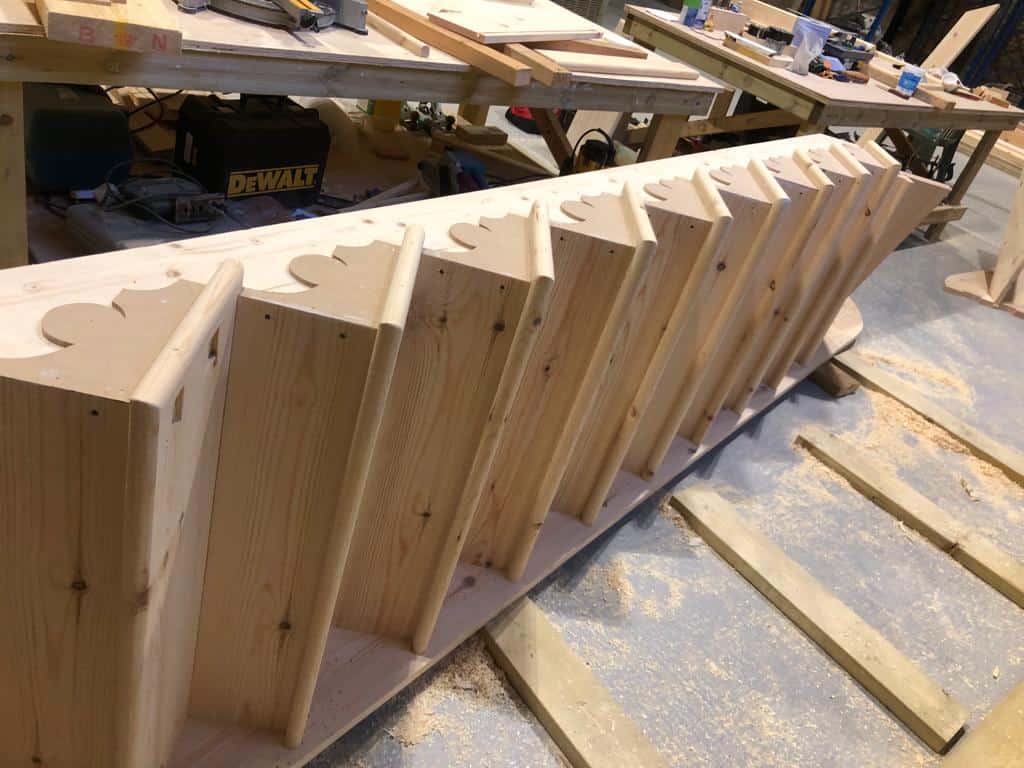
A cut string has the outer string cut away to follow the profile of the steps, so the ends of the treads are exposed. Done properly, the risers are mitred into the string so no end grain shows, the tread ends are returned with a moulded nosing, and often a decorative bracket is applied to the face of each step.
It is a considerably more labour-intensive way to build a staircase and it is one of the clearest markers of a high-end job. It is also almost always the right choice when the staircase is open to a hallway and seen from the side.
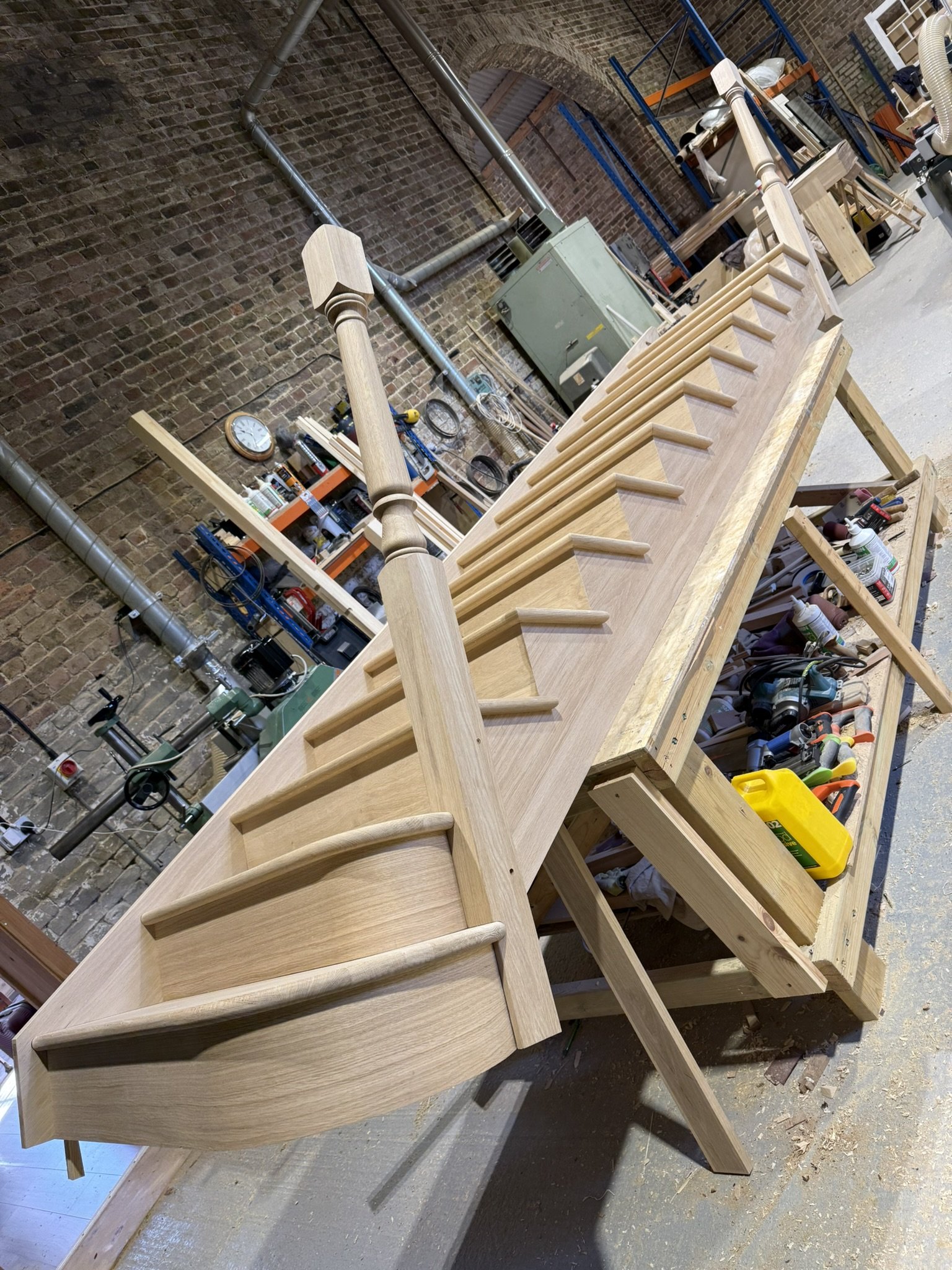
Species is the obvious variable. Redwood pine and MDF sit at the economical end, intended to be painted or carpeted. Oak is the default hardwood for exposed timber and the most popular by a wide margin. Ash gives a lighter, more contemporary grain. Walnut is the premium end — dark, dramatic, and priced accordingly.
Less obvious, and more important than most people realise, is how the boards were selected. On a high-value staircase the grain should run consistently across a run of treads, colour should be matched between adjacent components, and there should be no sapwood or knots in a prominent position. Achieving that means buying more timber than the staircase needs and rejecting the boards that do not work.
That waste is a real cost and it is one of the quiet differences between a quote that looks cheap and a staircase that looks right when it arrives.
Solid versus engineered is a separate decision. Engineered oak — a solid oak wear layer on a stable core — is more dimensionally stable than solid oak across a wide tread, and in a modern house with underfloor heating it is often the technically better choice rather than the compromise people assume it to be.
Tread thickness also matters visually. A 32mm tread reads as substantial in a way a 22mm tread does not, particularly on an open-sided flight where you see the edge.
Published UK guides consistently put the balustrade at roughly a quarter to a third of a staircase project’s total cost, and the range within it is wide: timber spindles at the economical end, then metal balusters, then glass — with frameless glass the most expensive per metre by some distance.
Turned timber spindles in a Georgian, Edwardian, Colonial or Imperial profile suit period properties and are the traditional choice. Black metal spindles against oak treads have become the dominant contemporary look and sit at a similar price point. Glass costs more and, in a period property, frequently looks wrong.
The newel posts are worth attention here too. A substantial turned or square newel with a proper cap, sized correctly for the staircase, anchors the whole balustrade. An undersized newel makes an otherwise good staircase look thin.
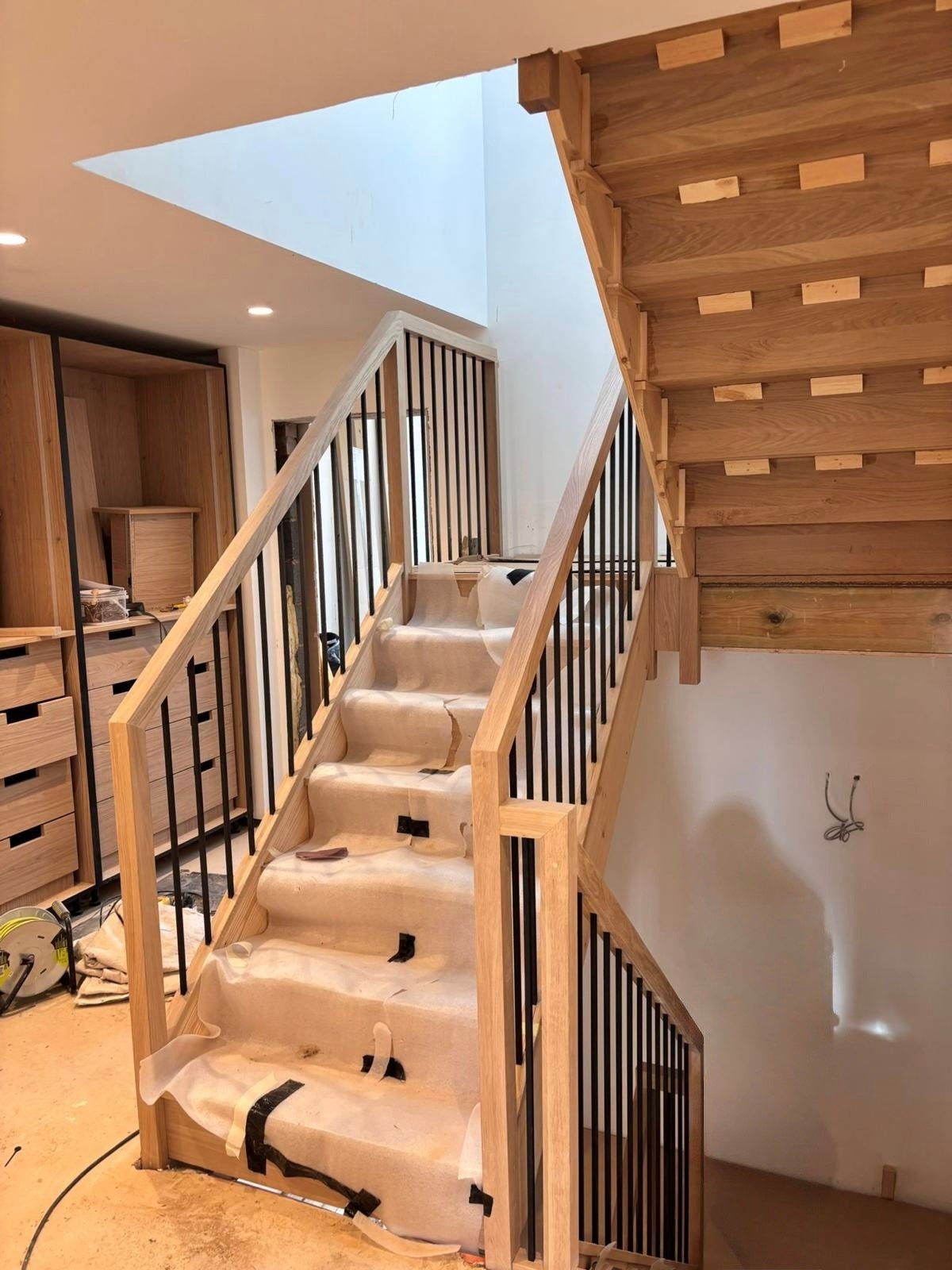
You can take delivery of a staircase raw, pre-finished in the workshop, or somewhere in between.
Workshop finishing gives a better and more even result than finishing in a dusty hallway, and it is the right answer for stain-matched work where the treads, handrail and newels all need to land on the same colour. Many clients still prefer raw delivery so their decorator can match an exact scheme on site. Both are legitimate; just decide before you compare quotes, because it is a common source of difference between them.
These are published UK market ranges for the whole job — staircase plus on-site labour — not our prices. They are useful for calibrating expectations:
| Project type | Typical UK range |
|---|---|
| Standard off-the-shelf staircase | £1,500–£4,000 |
| Good-quality hardwood staircase, straight or quarter turn | £8,000–£12,000 |
| Feature staircase with glass or metal balustrade | £9,500–£18,000 |
| Statement curved or floating design | £15,000–£30,000 |
| Large cantilevered or helical centrepiece | £30,000–£80,000+ |
Because we supply only, the joinery portion of any of those figures is what we quote against — and it is generally a good deal less than the bundled number suggests. Every staircase is priced individually from your dimensions and specification; there is no rate card, because there is no standard staircase.
If you send the same information to three manufacturers, you get three quotes you can actually read against each other. Send:
If any of that is uncertain, a design consultation resolves it. We visit the property, take the measurements properly, and produce CAD-ready drawings plus a full written quotation. It costs £200 and is credited against your order. On a curved staircase in a period property it is worth doing before anyone quotes anything, because the difference between the dimensions on a drawing and the dimensions in a 1890s hallway is frequently substantial.
The staircase terminology guide is a useful reference if any of the component names above are unfamiliar, and the building regulations guide covers the Part K constraints — rise, going, pitch, headroom and handrail heights — that limit what any design can do.
Our manufacturing lead time is 2–3 weeks from approved drawings, for all timber types. Curved and complex work takes longer, and we will tell you how much longer before you commit rather than afterwards.
The part people underestimate is the design stage in front of that. Getting drawings right on a high-end staircase — particularly a curved one, particularly in an older property — takes as long as it takes. Building into a programme on the assumption that a bespoke staircase behaves like a stock item is the most reliable way to end up compromising the design.
If the budget is fixed and something has to give:
Worth the money. The handrail, every time — it is the thing you touch daily and the detail that reads as quality from across a room. Cut string construction on any flight open to a hallway. Correctly sized newel posts. Timber selection and grain matching.
Easier to economise on. Glass balustrade, unless the interior genuinely calls for it. Exotic species where a well-selected oak would do. Curved geometry where a good quarter turn achieves most of the effect.
Never economise on. Structural adequacy and Part K compliance. A staircase that does not meet regulations is a staircase you pay to have made twice.
We have been making staircases in Hertfordshire for over forty years and we supply across London, Hertfordshire, Essex, Cambridgeshire and nationwide. If you have a high-value project in progress, send us your dimensions and specification and we will price it properly — or book a design consultation and we will come and measure it.
Have a look at the case studies for completed curved, cut string and hardwood projects, or get in touch with your drawings.
 Blog
BlogSearch for staircase manufacturers in London and you get a page of companies that all say roughly the same thing. Some of them make staircases. Some of them sell staircases somebody else makes. Some are fitters who order the flight in and put it in for you. Here is how to tell them apart, what to ask before you commit, and what a good quote from a genuine manufacturer should contain.
Read ArticleBlogAfter 40+ years supplying both, we break down the real differences between oak and softwood staircases — cost, durability, maintenance, and how to choose.
Read Article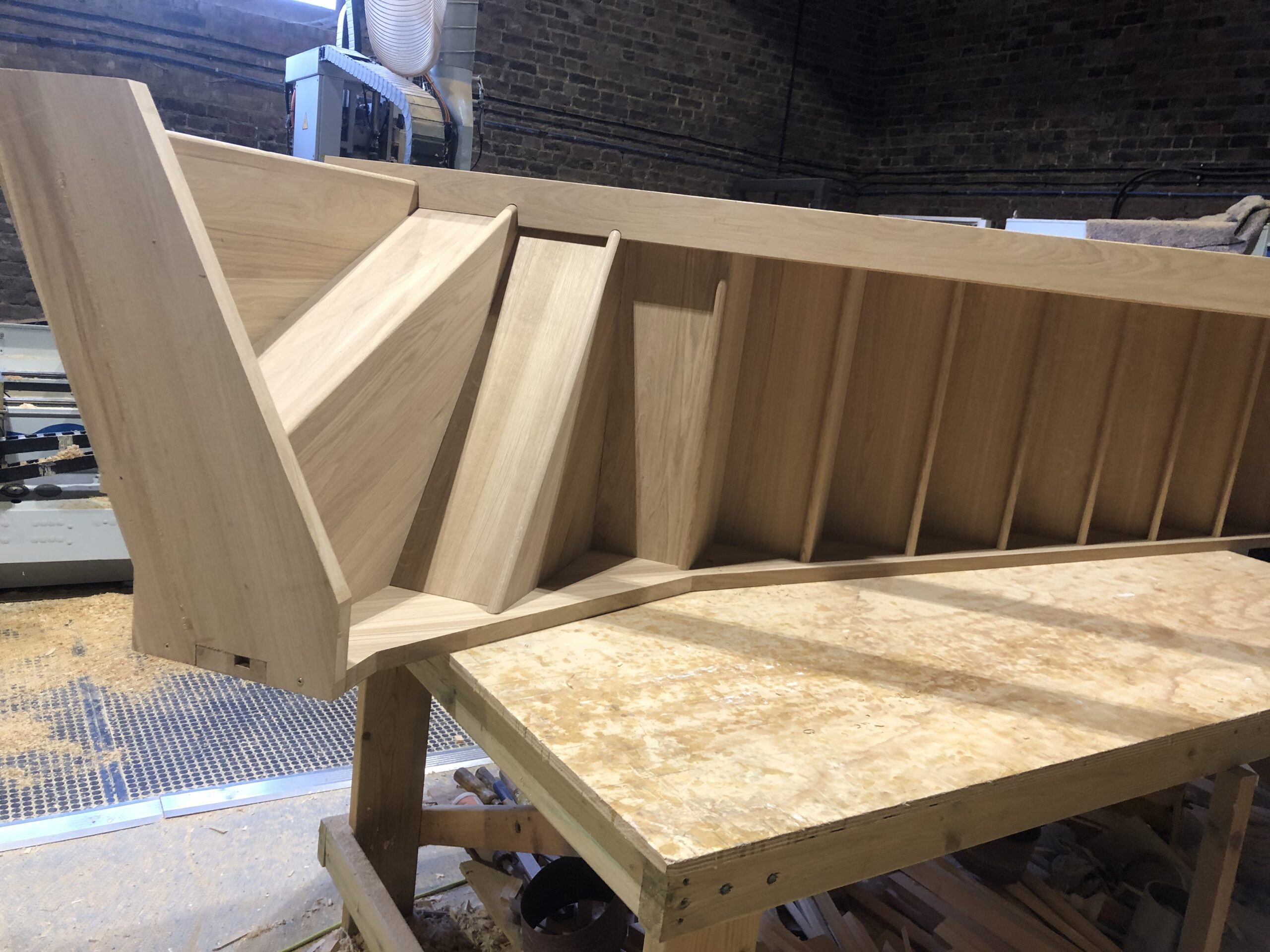 Blog
BlogExplore the top staircase design trends for 2026 — from floating oak staircases and glass balustrades to cut string designs and nature-inspired forms. Discover what's shaping the most impressive homes this year.
Read ArticleGet in touch with our team to discuss your project. We supply bespoke timber staircases throughout London, Hertfordshire, Essex, and nationwide — all made to measure.
We use cookies and similar technologies to improve your experience on dabstairs.com. By clicking “Accept All”, you consent to the use of all cookies. You can manage your preferences or learn more by visiting our Privacy Policy.