
Search for staircase manufacturers in London and you get a page of companies that all say roughly the same thing. Some of them make staircases. Some of them sell staircases somebody else makes. Some are fitters who order the flight in and put it in for you. Here is how to tell them apart, what to ask before you commit, and what a good quote from a genuine manufacturer should contain.
Search for staircase manufacturers in London and you get a page of companies that all say roughly the same thing: bespoke, made to measure, any timber, any design, forty years of experience. It reads as one industry. It is not.
Behind that page are at least four different kinds of business. Some own a workshop and make the staircase from boards. Some are joinery firms who make a staircase when asked but mostly do kitchens, sash windows and shopfronts. Some are online retailers of stair parts and standard flights, with a factory somewhere else in the country. And some are carpenters who order the staircase from one of the first three and put it in for you.
None of that is a criticism. Every one of those models is a legitimate way to get a staircase into a London house. But they carry different prices, different lead times and different risks, and the websites do not tell you which one you are looking at. This guide does.
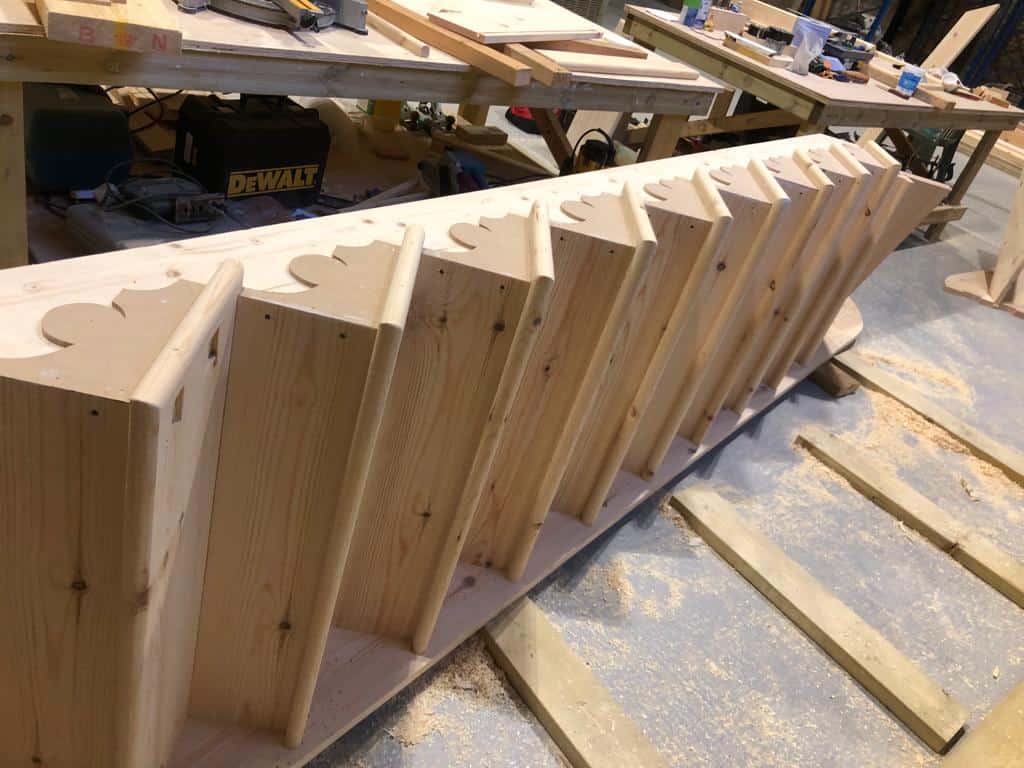
A company whose business is staircases and nothing else, with its own workshop, its own CNC machinery and its own drawings office. It takes your dimensions, produces drawings, makes the staircase and delivers it to site. Many are supply only, meaning a builder or joiner puts the staircase in.
We are one of these. Our workshop is in Hertford, about 25 miles north of central London, and we deliver into every London borough. Whether the workshop is inside the M25 or just outside it matters less than people expect. What matters is whether the company actually makes the thing.
Best for: anything made to measure, anything in hardwood, anything with a turn, winder or curve, and any project where the drawings need to be right before a builder commits to a programme.
A bespoke joinery workshop that makes staircases among many other things. The quality can be excellent, particularly on one-off period work, because the people making the staircase are used to unusual commissions. The trade-off is that staircases are not the core product, so lead times can stretch when the workshop is busy with a larger contract, and the drawings office may be one person.
Best for: projects where the staircase is one part of a larger joinery package the same firm is already making.
Online companies selling standard flights, stair parts and made-to-measure staircases at a configurator price. Fast, cheap and perfectly good for a straight softwood flight going under carpet in a new build. Less good when the opening is not square, the floor-to-floor height is unusual, or the staircase is going to be seen. Nobody has visited the property. The dimensions on the order form are the dimensions they will make.
Best for: straight flights in standard openings, to be painted or carpeted, where you or your builder are confident of the measurements.
A carpenter or building company advertising staircases who orders the flight from one of the three above and puts it in. This is the model most homeowners actually end up with, usually without realising. It is convenient, because you have one contact and one invoice. It is also the most expensive route to any given staircase, because the fitter’s margin sits on top of the manufacturer’s price, and it puts a layer between you and the person who decided what your staircase would look like.
Best for: people who want one company to handle everything and are happy to pay for that.
If you are working with a builder or architect already, the usual arrangement is the first one: the manufacturer supplies to site, the builder’s carpenter puts it in, and the drawings go between the two of them. That is how most of the staircases in our case studies were done.
A staircase for a London property is not a different product from a staircase for anywhere else. What is different is the building it is going into, and it changes what you should ask a manufacturer.
The properties are old and not square. Most of the London housing stock we supply into is Victorian or Edwardian. Walls lean, floor-to-floor heights are odd, and the original staircase was built to suit the house rather than a drawing. A manufacturer who has not measured a hundred of these will make you a staircase that is right to the millimetre for a hallway that does not exist. Ask whether they survey, and who does it.
Access is tight. A curved oak string does not go up a narrow terrace hallway in one piece, and a large flight may need to come through a first-floor window. A good manufacturer designs the staircase to arrive in sections that can be got into the building and asks about access before quoting, not on delivery day.
Parking and delivery windows. Deliveries into inner London need a plan for where the vehicle stops, how long it can stay there and who is on site to receive the staircase. A supply-only manufacturer will tell you exactly what they need arranged. A fitter usually absorbs this into their price without mentioning it.
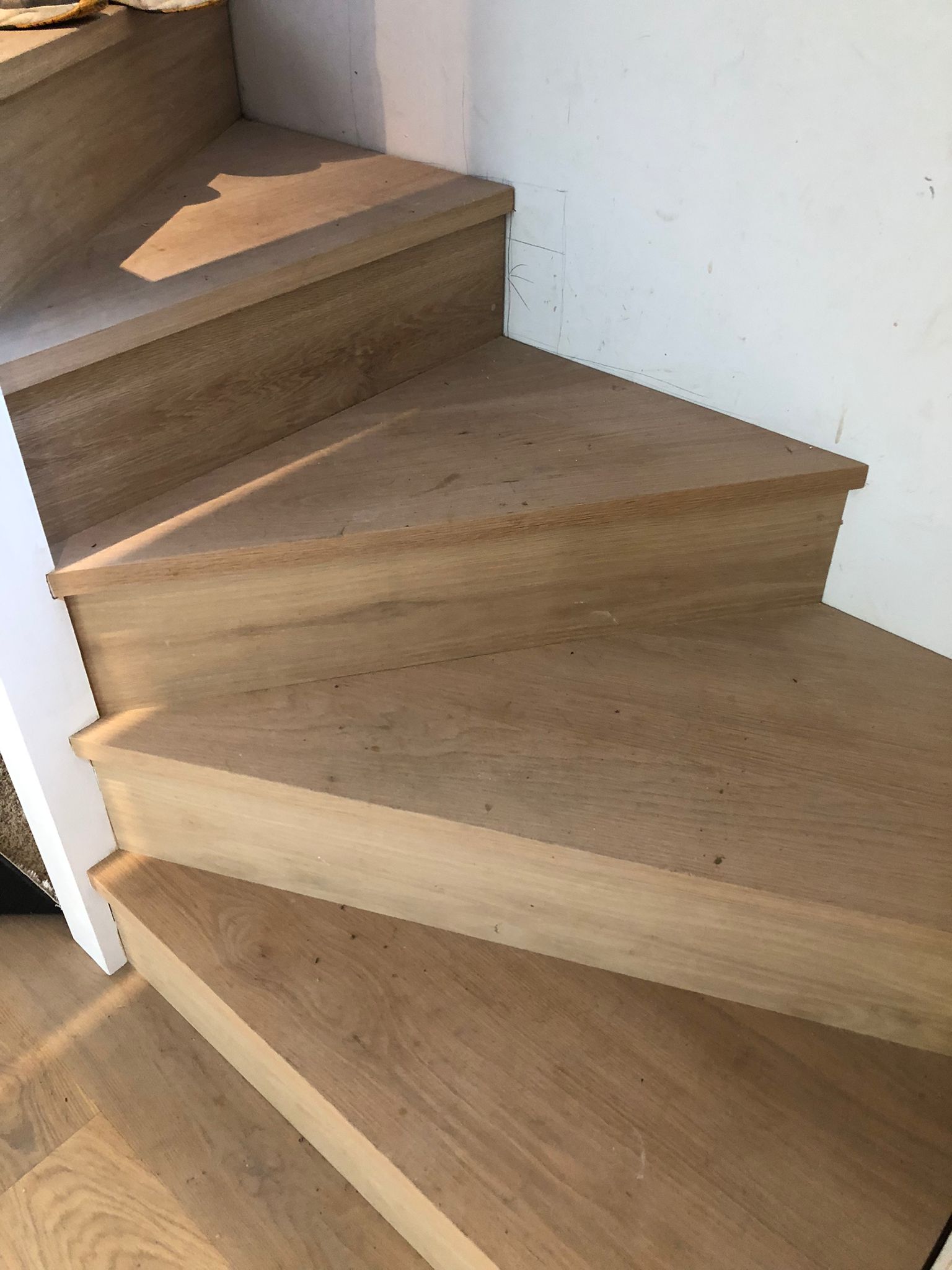
Loft conversions. A very large share of London staircase work is loft conversions in terraced houses, where the new flight has to land over the existing one with legal headroom and often needs winders to fit. This is where the difference between a stair parts configurator and a manufacturer with a drawings office is most obvious. The loft staircase page covers the options, and the planning permission guide covers the paperwork.
Building control. London boroughs are strict and busy. Approved Document K sets the rise, going, pitch, headroom and handrail height that any staircase has to meet, and the drawings will be checked. Ask whether the manufacturer produces drawings your building inspector can sign off. The building regulations guide explains what they will be checking.
Send the same list to every company you are considering. The ones who answer clearly are the ones to shortlist.
Do you make the staircase yourselves, and where? The single most useful question. If the answer is vague, you are talking to a reseller or a fitter. Ask to see the workshop, or at least photographs of staircases in it.
Who takes the measurements? You, your builder, or them. Each is acceptable, but the answer determines who is responsible when the staircase does not fit. If they survey, ask what it costs and whether it is credited against the order.
Will I get drawings before manufacture starts, and can I change them? A manufacturer should produce CAD drawings showing rise, going, headroom, string depth and every component, and should not cut timber until you have signed them off.
What is the lead time from approved drawings, and how firm is it? Ask for the number in weeks and ask what makes it longer. Ours is 2–3 weeks for all timber types, with curved and complex work quoted separately. A company that cannot give you a number does not control its own production.
What does the quote include? Design, manufacture and delivery is the standard scope for a manufacturer. Some quotes include a survey; some include workshop finishing; almost none include the on-site work. Two quotes that look far apart are often quoting different scopes.
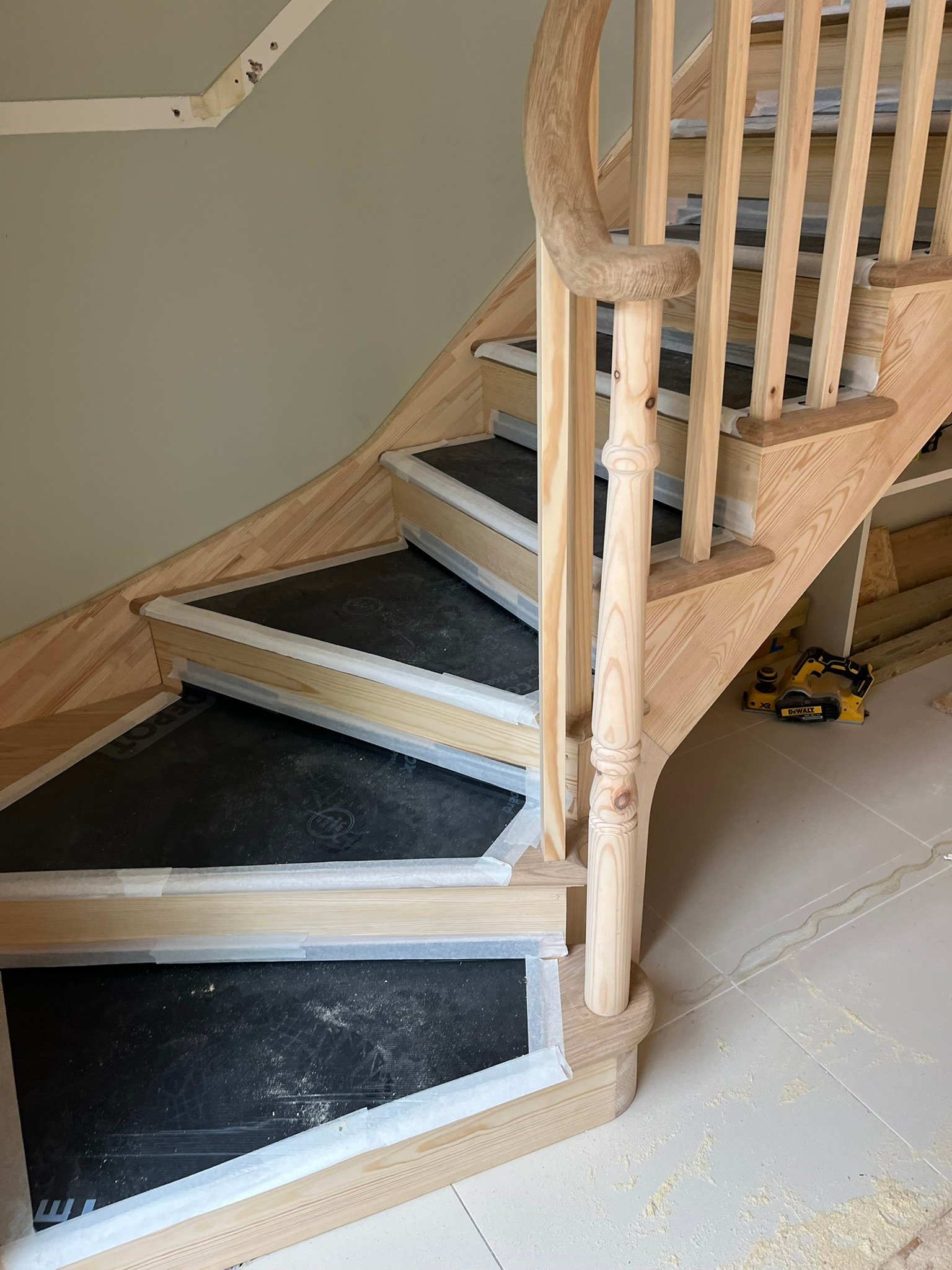
What is the string construction and tread thickness? A closed string in 32mm timber with 22mm or 32mm treads is a substantial staircase. Thinner strings and treads are cheaper and feel it. If a quote does not state the sections, ask.
What timber, and is it solid or engineered? Both are legitimate. Engineered oak is often more stable across a wide tread. But you should know which you are buying, and it should be on the quote.
Does the staircase comply with Approved Document K as drawn? The right answer is that the drawings show the rise, going, pitch and headroom figures and that they are within the limits. If the manufacturer cannot say, your building inspector will.
How will it arrive, and what do I need to arrange? Sections, packaging, vehicle size, whether a forklift or two people are needed, what happens if nobody is on site.
Can I see completed projects like mine? Not a gallery of the best work. Projects with the same configuration in the same kind of house. A manufacturer who has done fifty terraced-house loft flights can show you fifty.
You should be able to read a staircase quote and know exactly what is being made. As a minimum it should state:
If a quote is a single line with a price, you are not comparing staircases. You are comparing numbers, and the cheapest one is the one most likely to be missing something. The high-end staircase cost guide goes through what moves the price on a timber staircase, component by component, and the terminology guide will decode any of the words above.
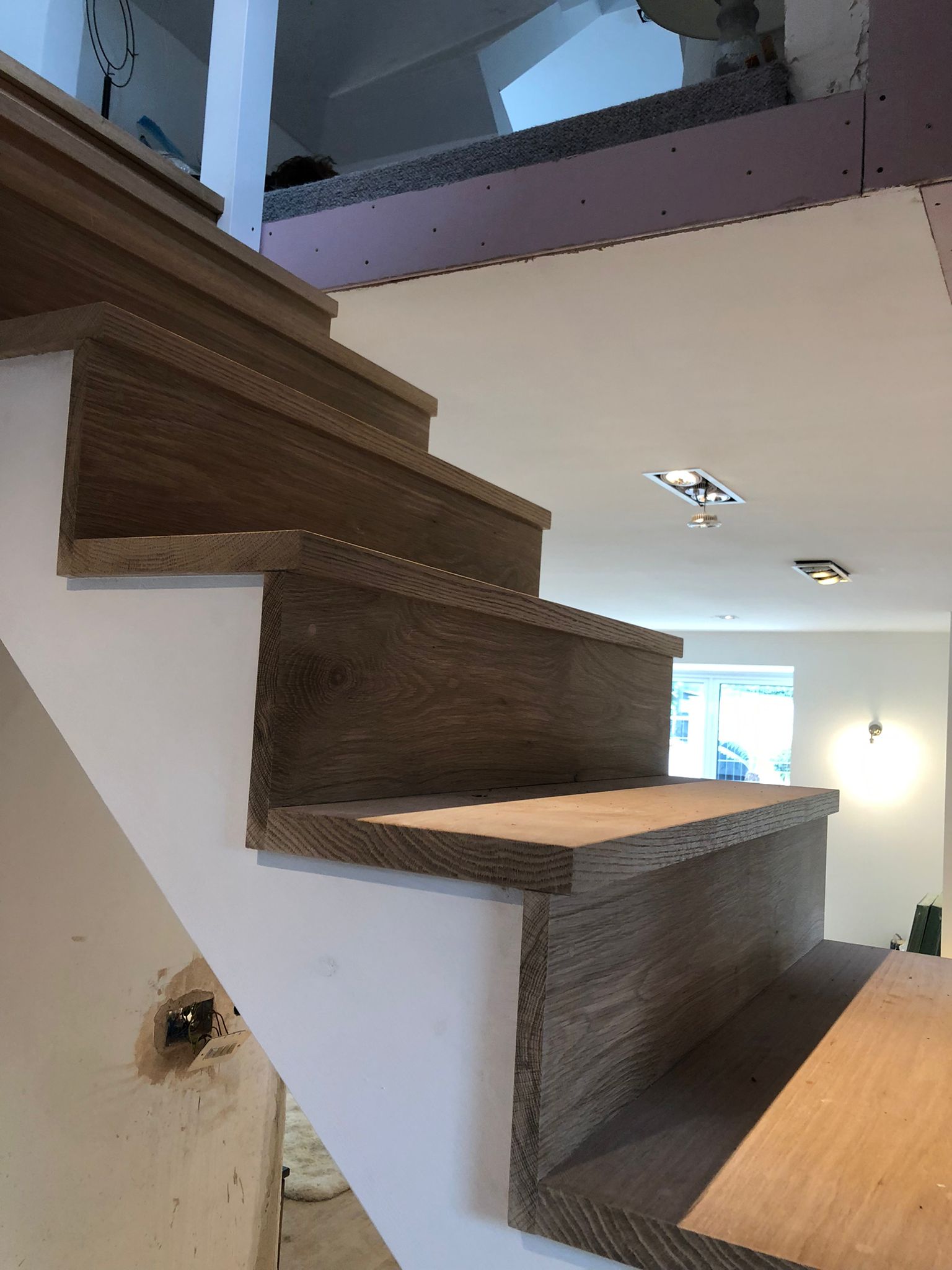
We supply only. We design and manufacture the staircase and deliver it to site, and your builder or joiner takes it from there. Some people hear that as a limitation. In practice it is how most bespoke staircases in London are bought, and there are good reasons for it.
You are not paying a margin on a margin. A fitter who buys in a staircase marks it up. Buying from the manufacturer and paying a carpenter for the site work is almost always cheaper for the same staircase.
The people on site are the people already on site. If you are mid-renovation, your builder has a carpenter who knows the house, is there every day and can put the staircase in when the floor and walls are ready rather than when a separate company can fit you in.
The drawings are the contract. Because we do not put the staircase in, we cannot adjust it on site to cover a measurement error. That sounds like a disadvantage. It means we measure and draw carefully, get sign-off before cutting, and make exactly what was agreed.
If you do not have a builder, we can suggest experienced carpenters who have put our staircases in before.
If they were buying a straight softwood flight for a new-build extension, to be carpeted, in an opening their builder had already measured: use a stair parts retailer, save the money, check the rise and going against Part K before ordering.
If they were doing anything else in a London house, and particularly anything in oak, anything with winders or a turn, or anything in a Victorian or Edwardian property: get quotes from two or three genuine manufacturers, send them all the same dimensions, ask the ten questions above, and pick the one whose drawings and answers you understood.
And if the measurements are uncertain, which in a period property they usually are, pay for a survey before anybody quotes. Ours is a design consultation at £200, credited against the order, and it produces CAD-ready measurements and a full written quotation. It is the cheapest part of the whole project and the one most likely to save you money.
DAB Stairs has been manufacturing bespoke timber staircases in Hertfordshire for over forty years, supplying into every London borough as well as Hertfordshire, Essex, Cambridgeshire and nationwide. The London staircase page covers delivery areas and borough-by-borough projects, or send us your dimensions for a quote.
 Blog
BlogA £4,000 staircase and a £25,000 staircase can look similar in a photograph. The difference is in the geometry, the timber, the handrail and the joinery — and almost none of the companies quoting you will explain which of those you are actually paying for. Here is where the money goes on a high-value timber staircase, and how to specify one so the quotes you get back are comparable.
Read Article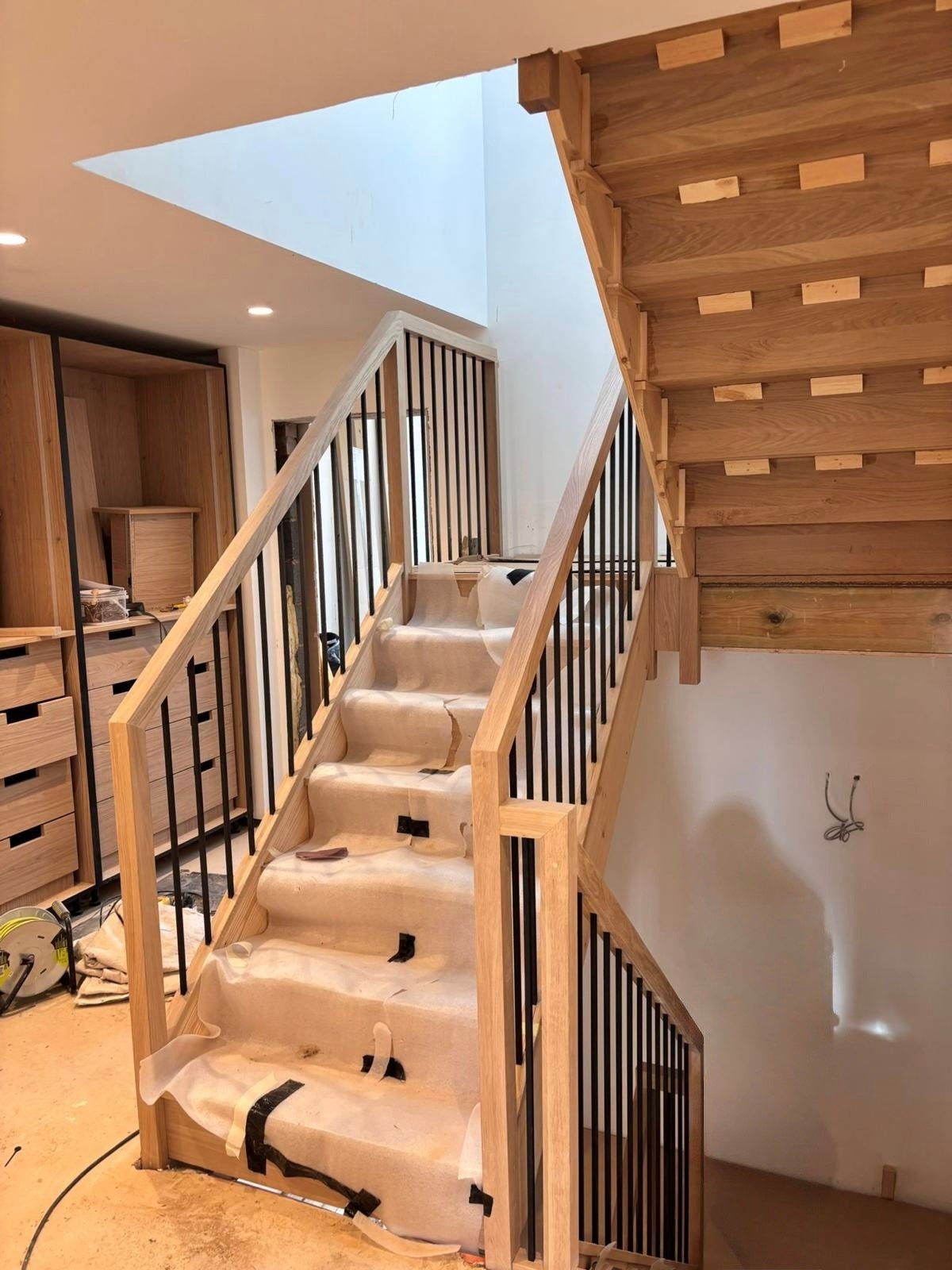 Blog
BlogAfter 40+ years supplying both, we break down the real differences between oak and softwood staircases — cost, durability, maintenance, and how to choose.
Read Article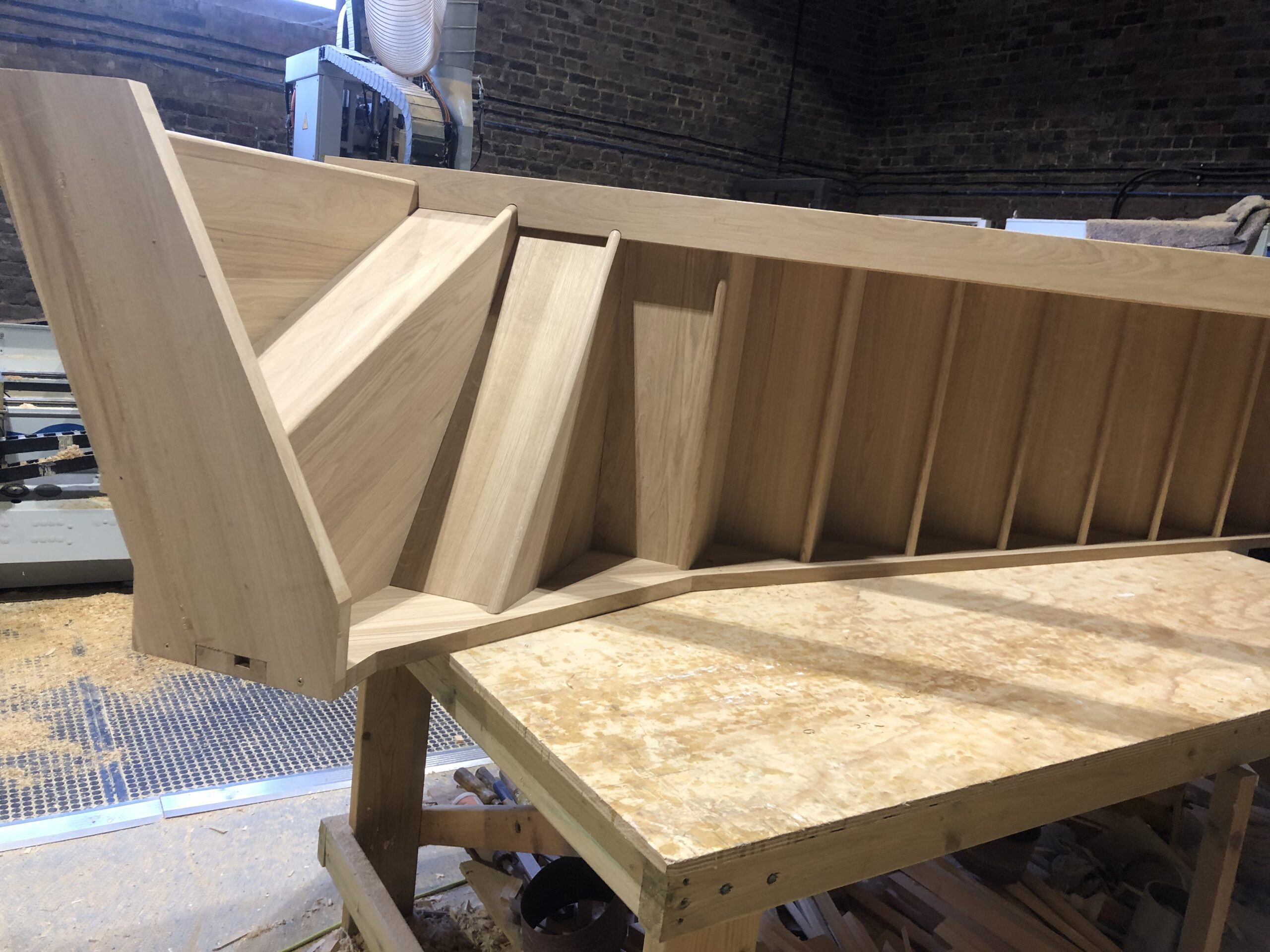 Blog
BlogExplore the top staircase design trends for 2026 — from floating oak staircases and glass balustrades to cut string designs and nature-inspired forms. Discover what's shaping the most impressive homes this year.
Read ArticleGet in touch with our team to discuss your project. We supply bespoke timber staircases throughout London, Hertfordshire, Essex, and nationwide — all made to measure.
We use cookies and similar technologies to improve your experience on dabstairs.com. By clicking “Accept All”, you consent to the use of all cookies. You can manage your preferences or learn more by visiting our Privacy Policy.